Bosch
PRO360 — B2B Hardware & Software Ecosystem
Led UX for a role-based mobile experience connecting professional power tools to software, balancing field constraints with strategic digital goals.
Key points
Role
Senior UX Designer
Year
2022 – 2023
Problem
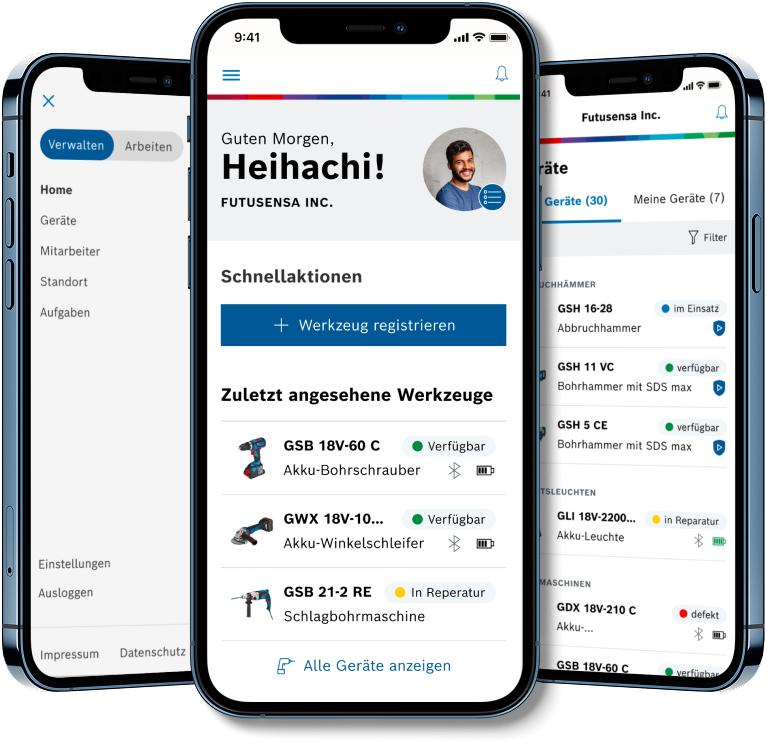
Bosch Power Tools expanded its professional hardware offering with digital services through a mobile application connected to Bluetooth‑enabled tools. Advanced digital features risked low adoption among field workers due to harsh work environments, while managers and dealers required richer data and remote capabilities.
Solution
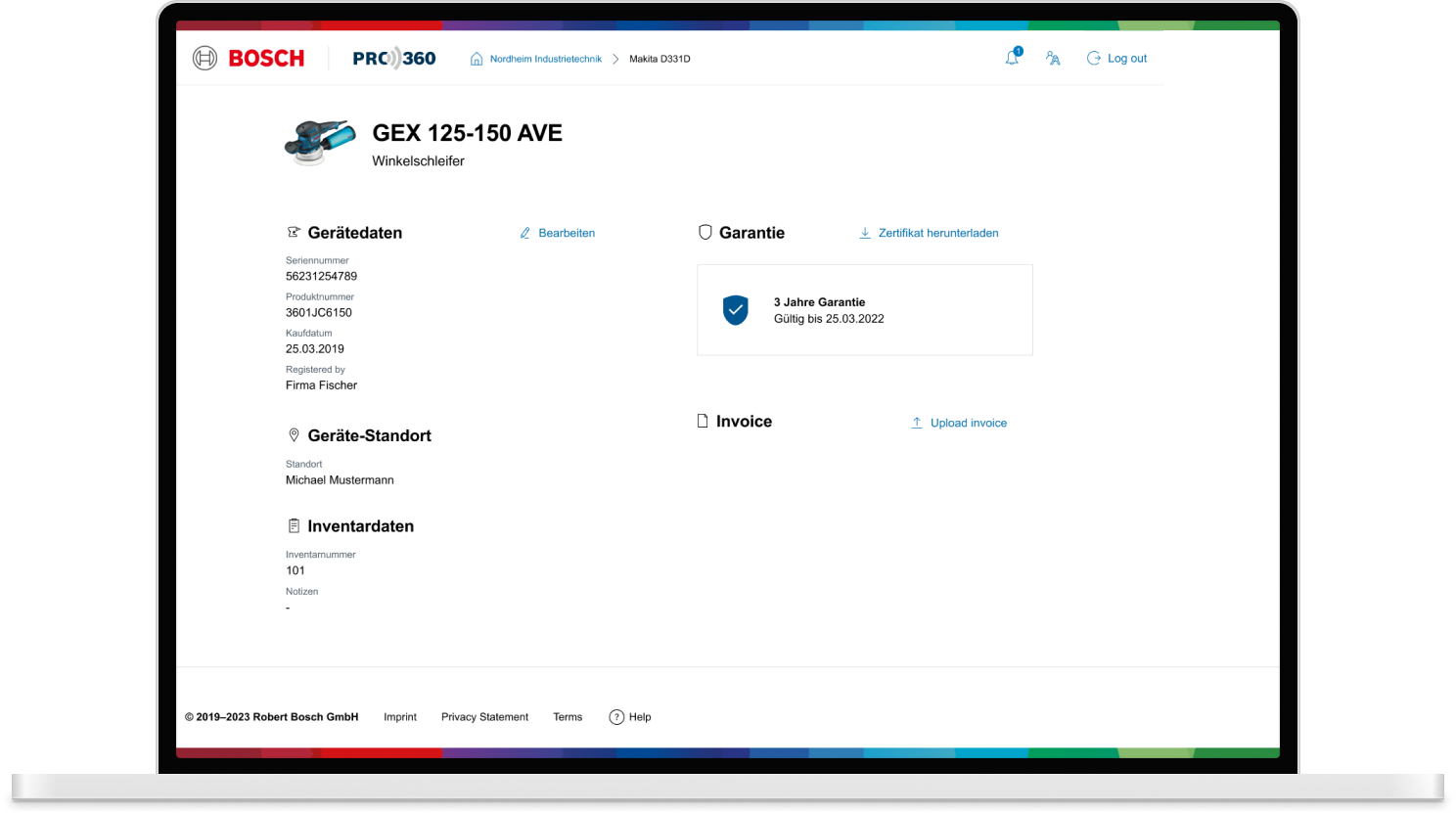
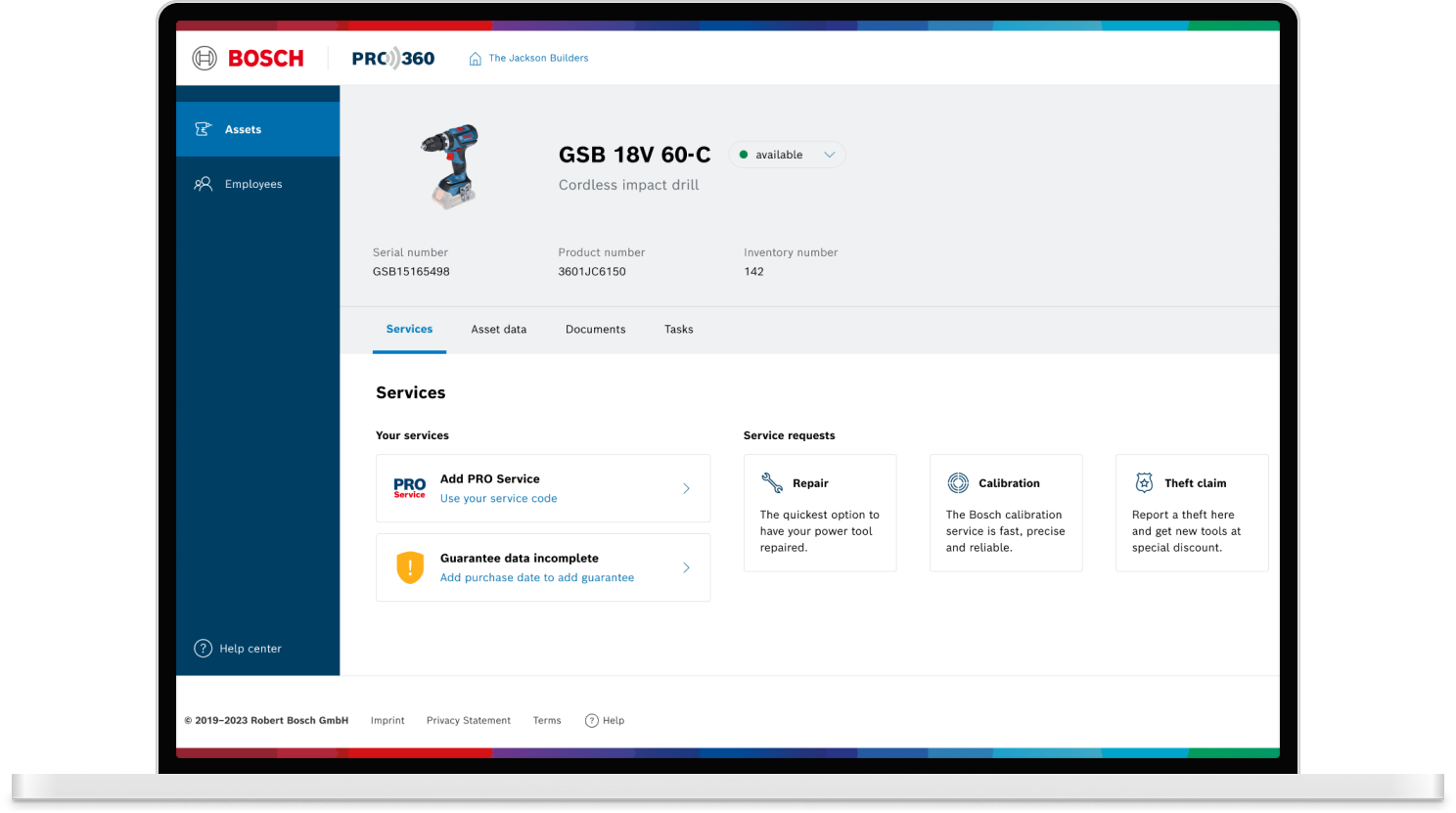
Led research to define a role-based UX model for four user groups. Drove adoption among managers and dealers by separating critical field tasks from advanced features, reducing complexity for on-site workers.
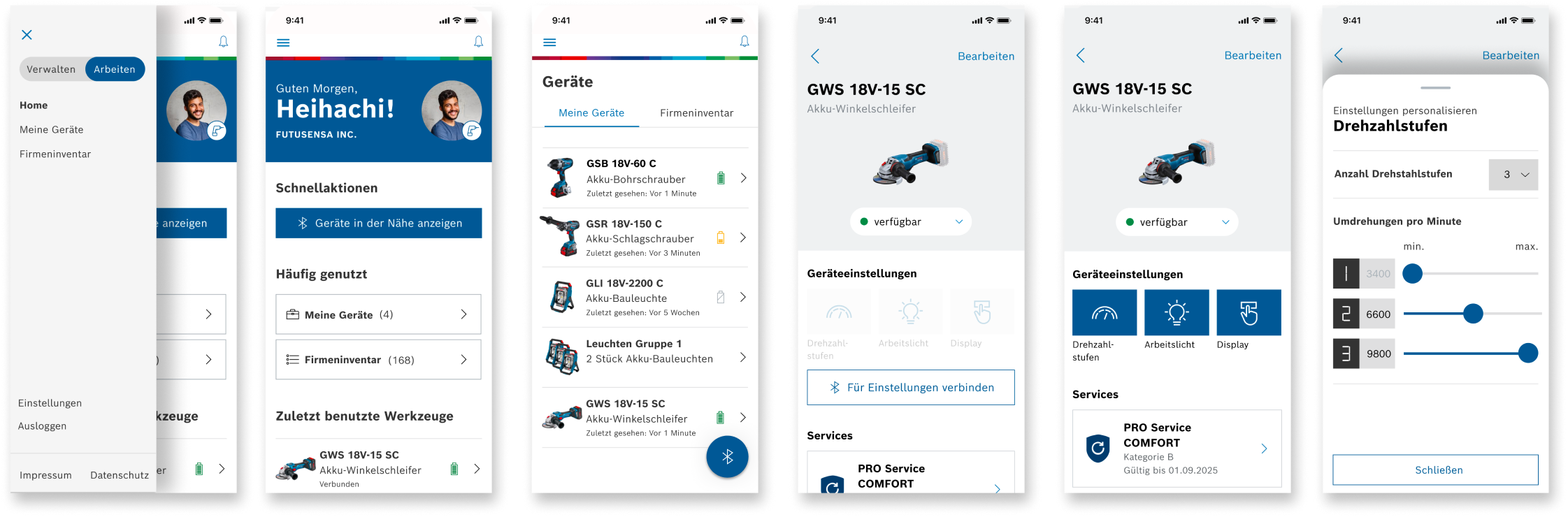
Mapped role‑specific needs and constraints across field and back‑office contexts.
To ensure relevance and usability, I conducted user research with four key end-user groups: professional construction workers, hobbyist home builders, inventory managers at construction firms, and power tool dealers. Each group brought unique perspectives and workflows, shaped by vastly different environmental and practical constraints. While managers and dealers responded positively to features like remote diagnostics and inventory management, field users—particularly construction workers—expressed skepticism toward the utility of Bluetooth features accessed via mobile apps.
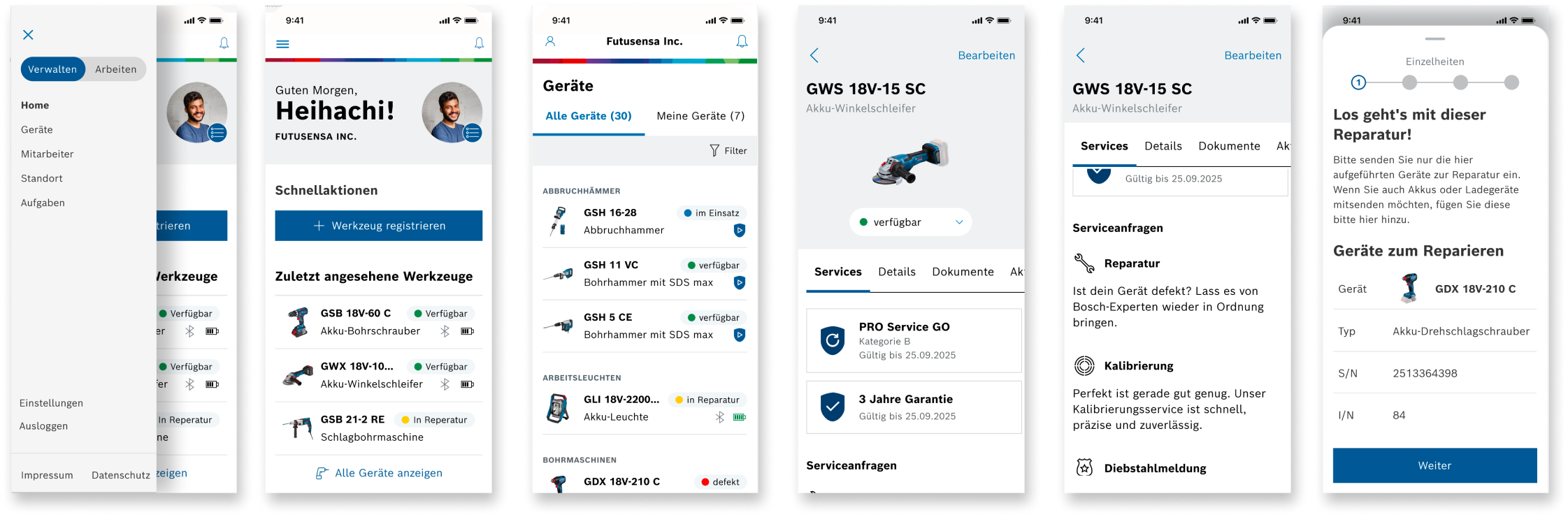
Designed simplified flows for construction workers and advanced tool documentation for inventory managers.
For field users, we prioritized quick access and minimal interaction: large touch targets, glove-friendly controls, and offline functionality where feasible. We also introduced a “quick pair” option that minimized steps in the Bluetooth setup process. Meanwhile, we reserved more advanced features—like analytics and remote diagnostics—for use by managers and dealers, tailoring the app experience to different user roles.