Role
Design Lead
Client
Futurice / German Media Company (NDA)
Date
2022 – 2022
Description
As the team lead of three designers on this transformative project, I am proud of our collaborative efforts in navigating the complex landscape of the media company’s systems and workflows. The client was facing significant challenges in program planning and advertising due to outdated and inconsistent systems and processes. Each system had different owners, technologies, and limited integrations. The complexity of operations and the large number of channels necessitated an upgrade to the program planning system. Data fragmentation across systems complicated decision-making, emphasizing the need for an integrated, user-centered system to enhance efficiency, collaboration, and data visibility.
- Challenges
Disparate systems, data fragmentation, complex operations. - Phases
Discovery, design initiation, development/testing. - Features
Integrated workflows, calendar/timeline views, enterprise suite functionalities. - DesignOps
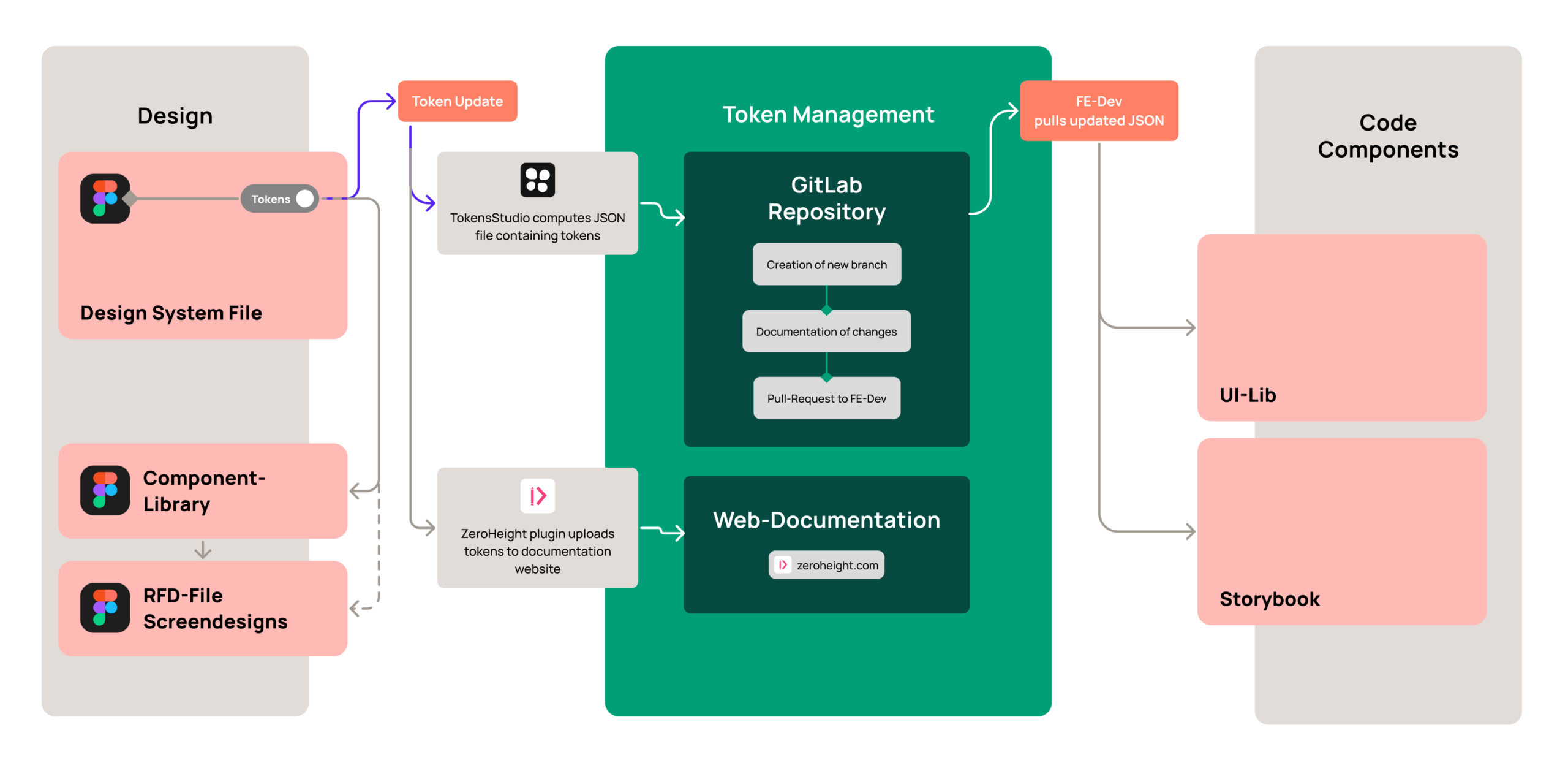
Retroactive design token implementation and streamlined token flow for development control.
Approach and Phases
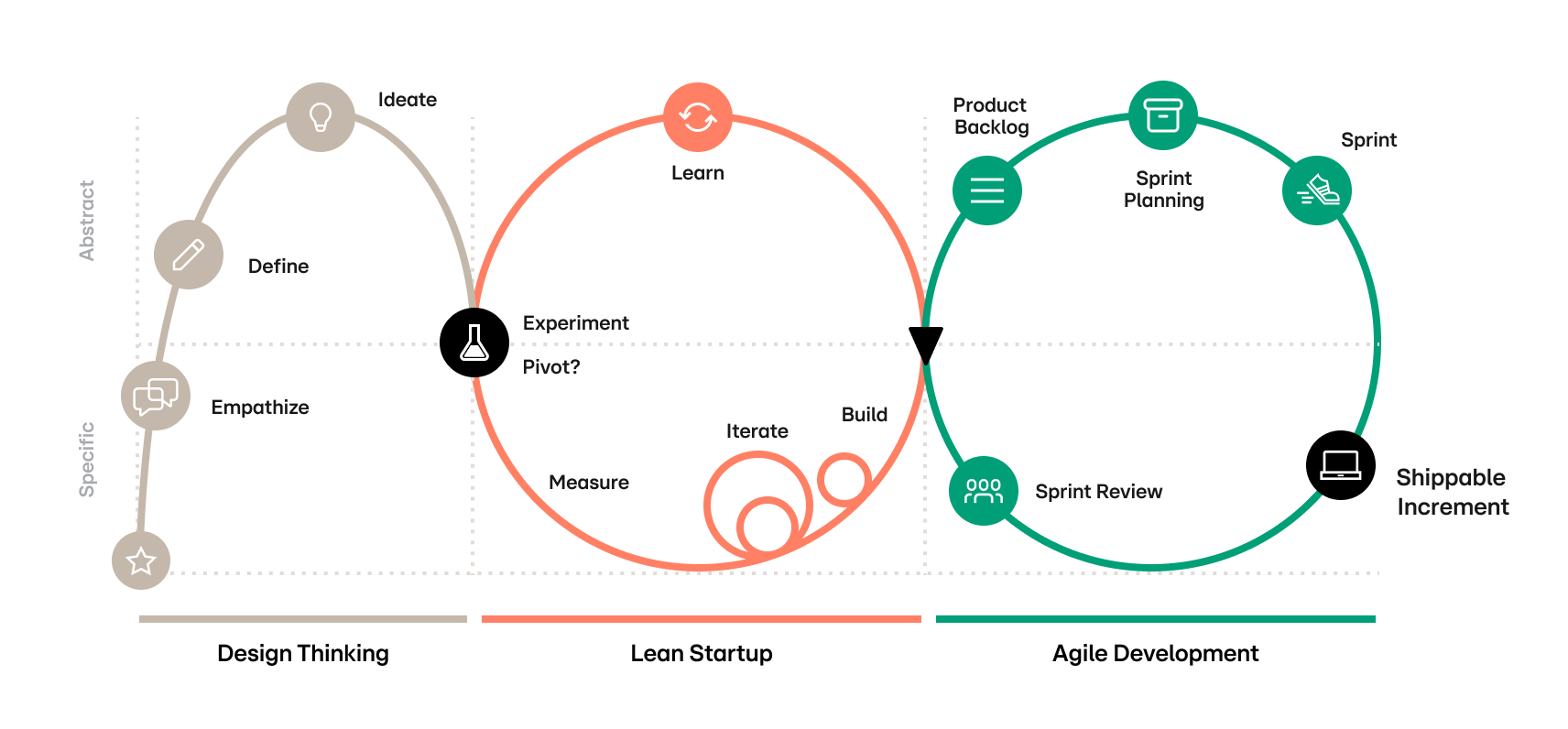
The project followed a structured approach involving service design, strategy consulting, user experience, and interaction design, with limited development support. It was divided into three phases:
1. Discovery
Mapped the current state, stakeholders, roles, tools, and workflows.
Aligned with organizational strategy at various levels.
2. Design Initiation
Added UI/UX designers to convert insights into screen designs.
Assisted with the initial development of the application.
3. Development and Testing
Focused on building and reviewing designs for development.
Emphasized continuous testing and user alignment.
Central Ideas and Features
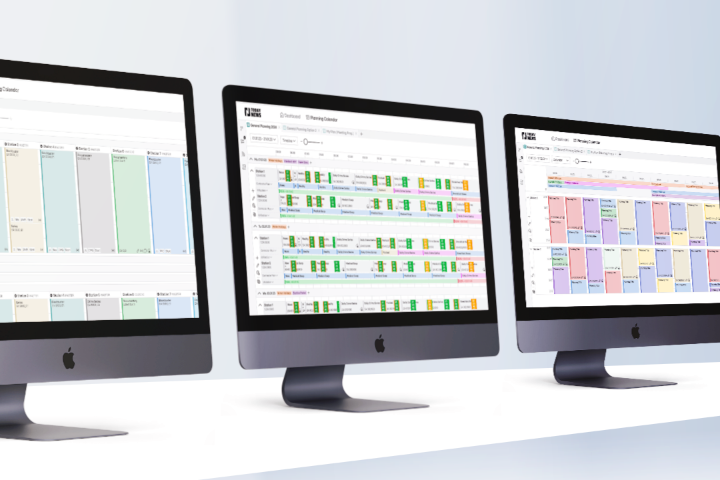
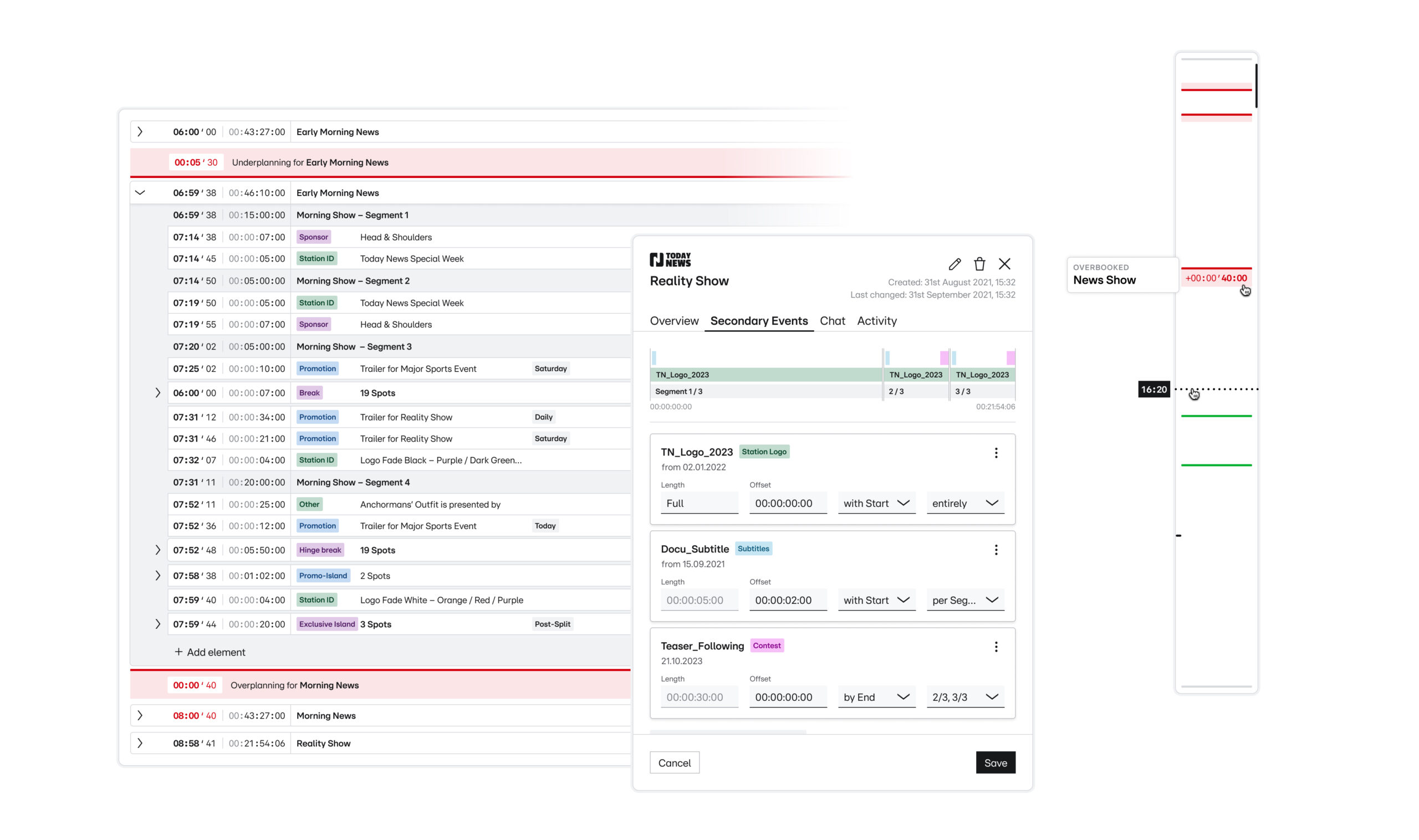
The tool aimed to merge separated workflows into a cohesive user experience, promoting collaboration and flexible organizational layouts. Key features included:
Calendar View
A versatile, role-agnostic starting point familiar to users.
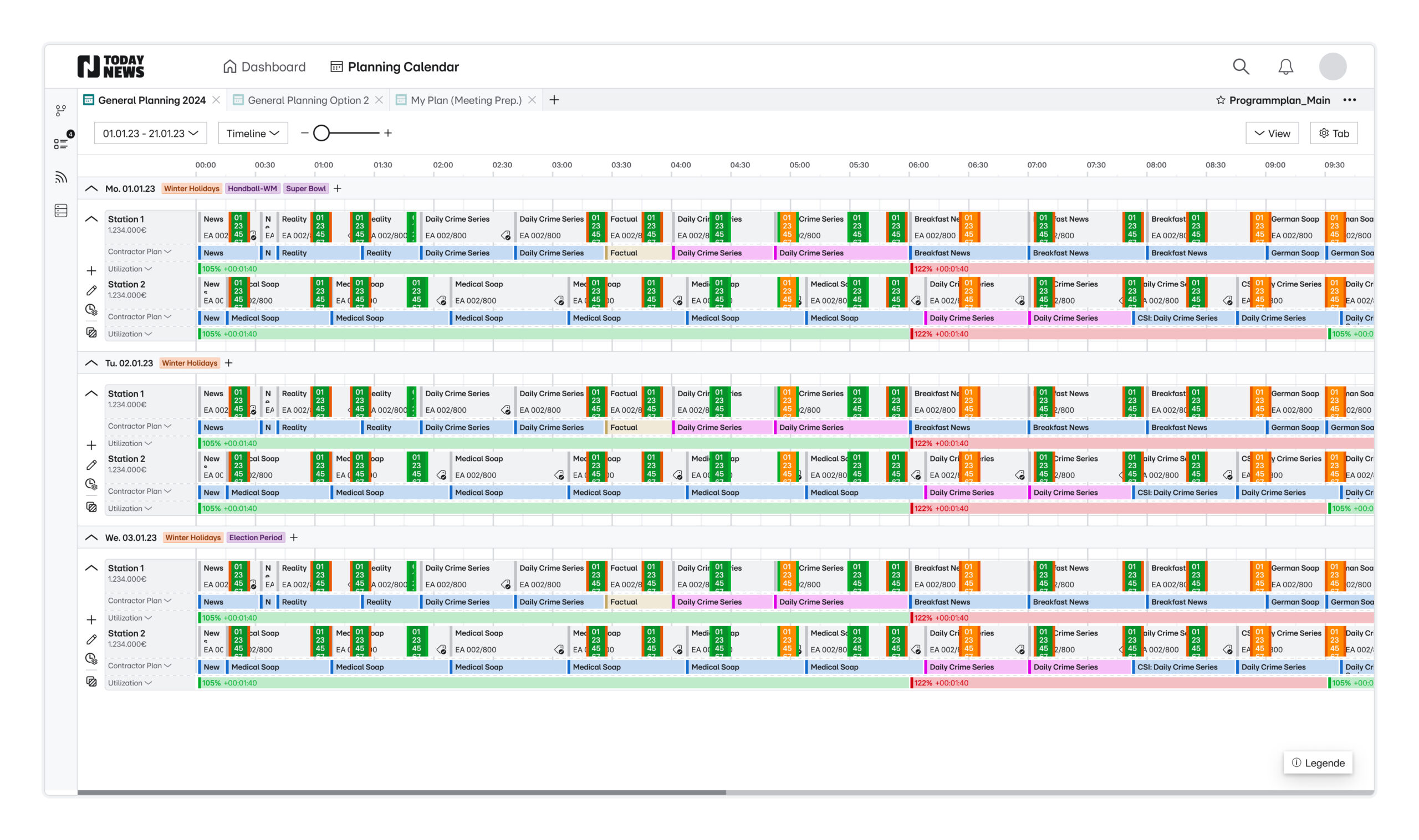
Timeline View
Enhanced readability and comparison for advertising slot planning, with a horizontal time-axis layout.
Enterprise Suite Features
Version control, planning pools, and activity stream to improve transparency, communication, and processing time.
Customizations
Case-sensitive options tailored to the specific requirements of different roles and stakeholders.
DesignOps and Token System
The project lacked an upfront design system strategy, leading to targeted problem-solving initiatives. By phase 3, a design token structure was retrofitted:
Design Tokens
Based on color styles and Nathan Curtis‘s „Naming Tokens in Design Systems.“ This included 350 tokens with semantic and global layers set up in Figma.
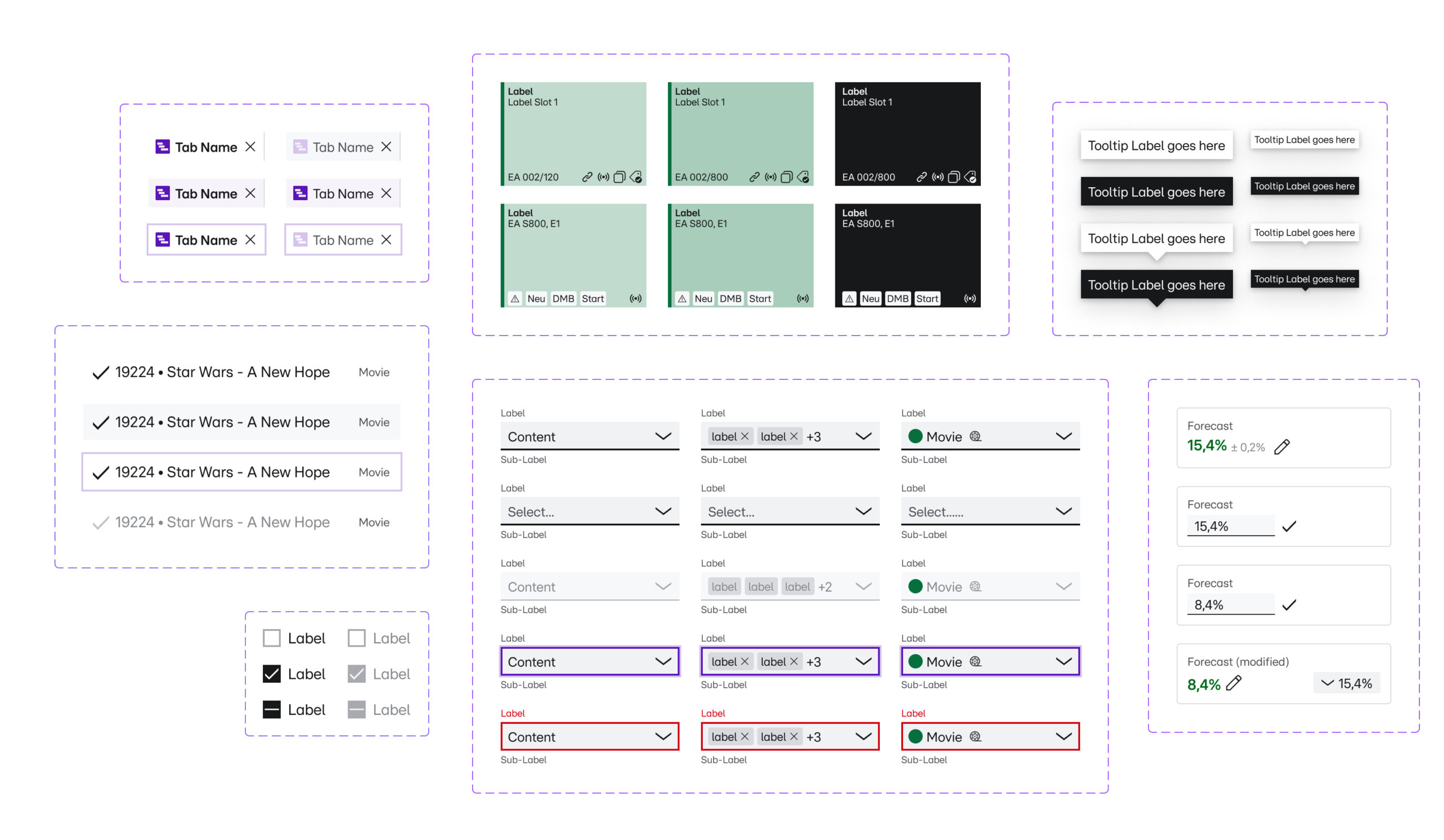
Token Flow
Implemented a lightweight flow for easy developer control over changes, future-proofing the interface between design and development.